
Flex London
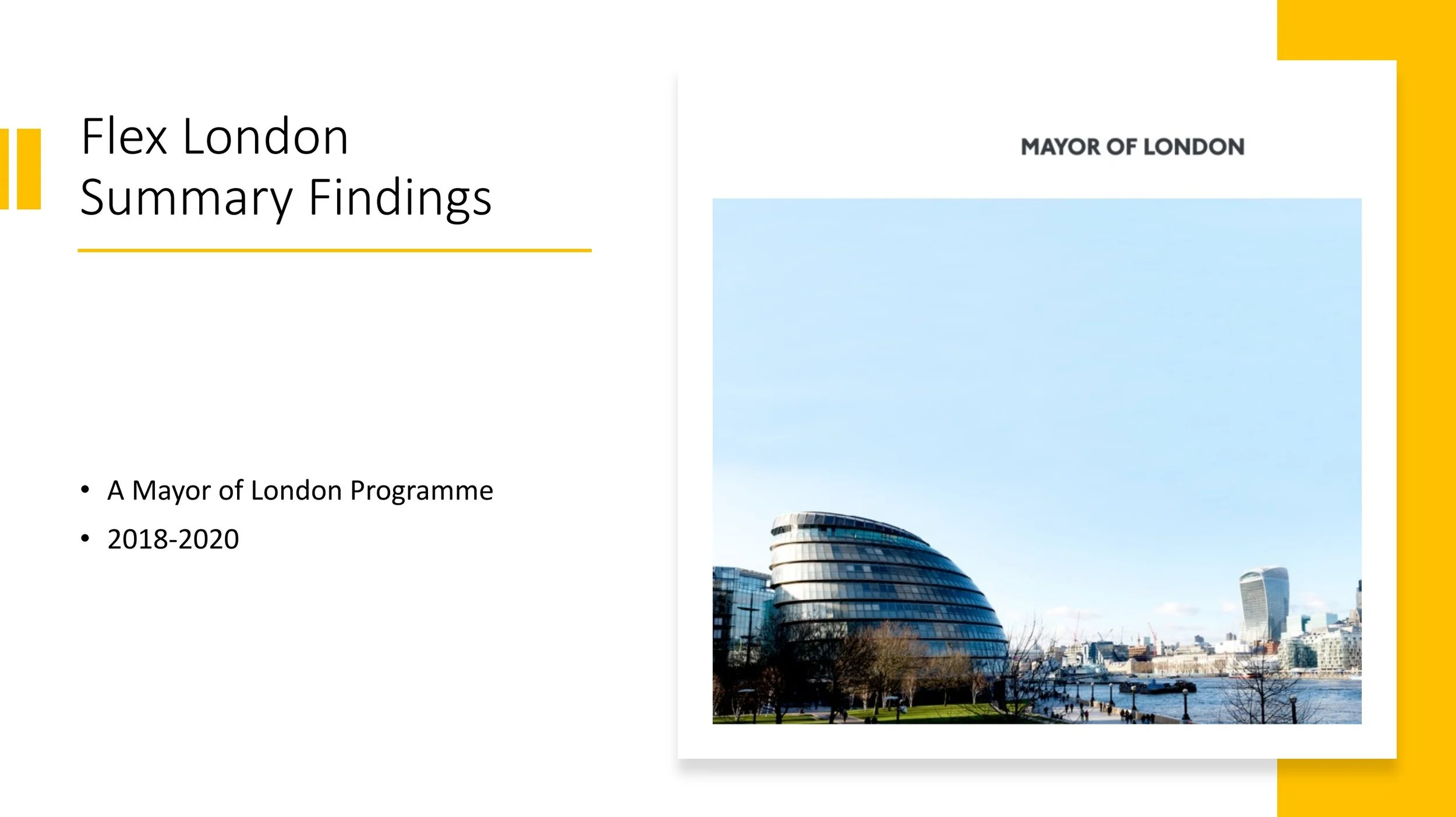
Flexibility Could Be the Missing Link in Delivering Net Zero Cities
A new summary report from the Mayor of London’s FlexLondon programme highlights the growing importance of energy flexibility in creating smarter, lower-carbon, and more resilient cities. Delivered between 2018 and 2020, the programme brought together energy users, innovators, technology providers, and public sector organisations to explore how London could unlock flexible energy demand and accelerate the transition to a net zero energy system.
At its core, FlexLondon focused on one of the biggest emerging challenges in the energy transition: how cities can better manage when and where energy is consumed as electricity systems become increasingly decentralised and reliant on renewable generation. The report argues that flexibility — the ability to shift energy use, generation, or storage in response to system needs — will become essential as electric vehicles, heat electrification, batteries, solar power, and local energy systems continue to scale.
The programme set out not only to identify viable flexibility projects across London, but also to understand the real-world barriers preventing flexible energy systems from scaling commercially. Through market engagement, innovation workshops, hackathons, and project development sprints, the programme created a pipeline of flexibility opportunities while uncovering critical technical, commercial, and regulatory challenges that continue to slow deployment.
One of the report’s central conclusions is that cities have a unique and strategic role to play in the energy transition. Unlike national energy systems alone, cities sit at the intersection of transport, housing, infrastructure, energy demand, air quality, and public services. This creates significant opportunities to optimise local energy systems while delivering wider social, environmental, and economic benefits — from cleaner air and reduced emissions to improved resilience and lower infrastructure costs.
The programme identified several high-potential use cases for scaling flexibility across London, including smart EV infrastructure, solar-plus-storage systems, flexible heating in social housing, and replacing diesel backup generators with cleaner flexible energy assets. Many of these opportunities demonstrated strong potential for replication at city scale if commercial, policy, and data barriers could be overcome.
Importantly, the report highlights that flexibility is not simply a technical challenge — it is also a coordination challenge. Delivering value from flexibility often requires aligning multiple stakeholders, data sources, infrastructure systems, revenue streams, and policy objectives. Current market structures frequently fail to properly reward the wider societal benefits created by flexible energy systems, such as carbon reduction, air quality improvement, and avoided infrastructure upgrades.
Key Findings from the Research
Flexibility is expected to become a critical component of delivering a cost-effective net zero energy system, particularly as transport and heating become increasingly electrified.
London has the potential to provide up to 1GW of energy flexibility to the wider GB electricity system through smarter management of distributed energy assets and demand.
The FlexLondon programme engaged 28 major organisations, more than 120 innovators, and identified dozens of flexibility opportunities across public and private sector infrastructure.
Four major flexibility projects progressed to feasibility and business case development, demonstrating practical opportunities for deployment in real-world city environments.
Replicable use cases identified through the programme included EV charging infrastructure, social housing heating flexibility, solar-plus-storage systems, and diesel generator replacement.
One social housing heating opportunity identified potential scalability across approximately 160,000 homes, representing an estimated 1.2–1.6GW of flexible demand capacity.
Significant barriers to scaling flexibility remain, including uncertain revenue streams, fragmented value chains, limited market incentives, and difficulties accessing and analysing energy data.
The research found that flexibility projects often create substantial “non-energy” value — including air quality improvements, resilience, reduced carbon emissions, and lower infrastructure disruption — but these benefits are rarely monetised within current market structures.
The report concludes that cities will need to play a far more active role in enabling local energy system integration, opening access to energy data, embedding flexibility into planning and decarbonisation policy, and creating environments where flexible energy projects can scale.
Ultimately, the FlexLondon programme demonstrates that flexibility is not simply an operational tool for balancing the electricity grid — it is a foundational capability for creating smarter, cleaner, and more resilient cities. The report suggests that unlocking flexibility at scale could help accelerate net zero delivery while reducing system costs, improving urban resilience, and creating new value streams across the built environment and transport sectors.